

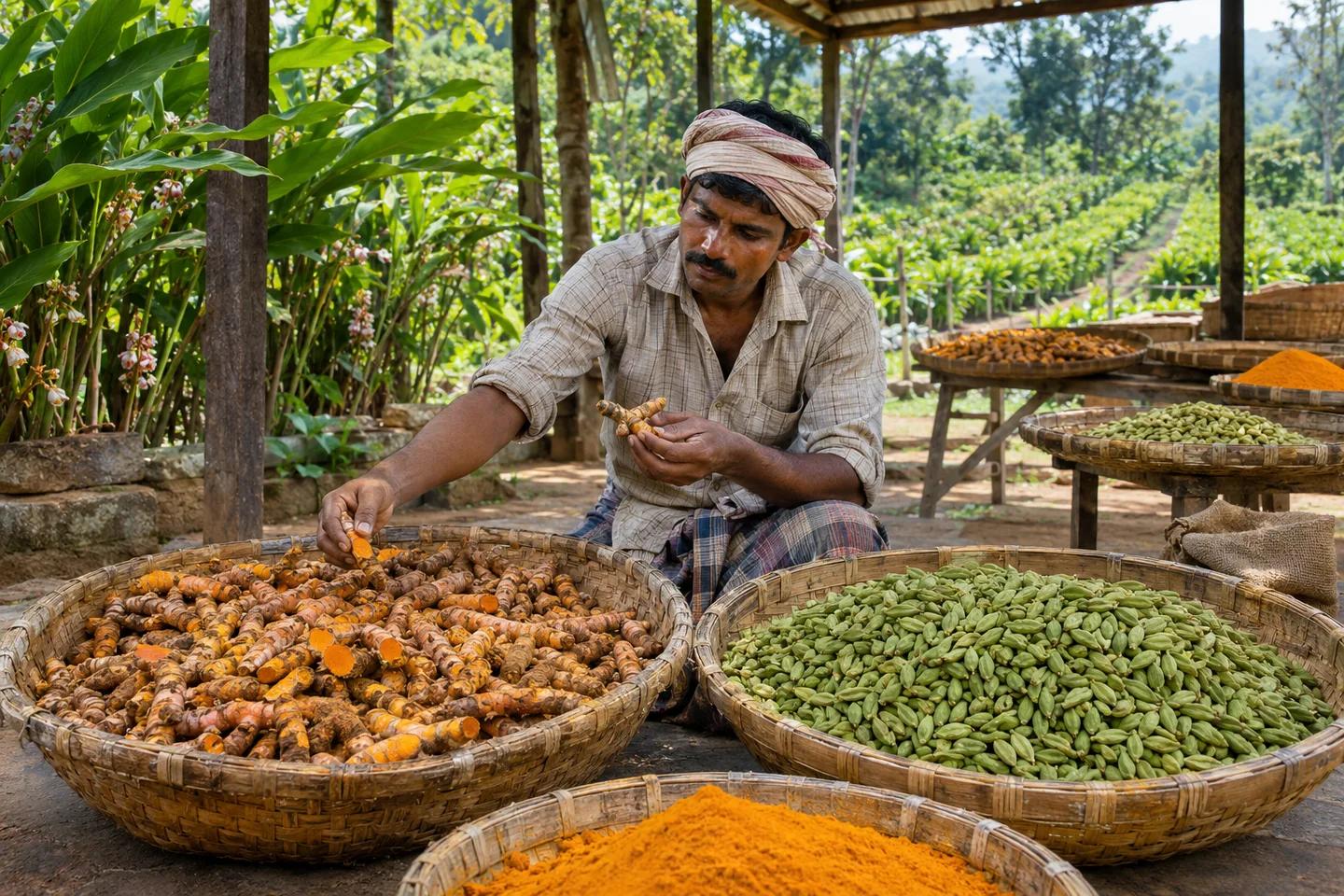
Nuts, spices, medicinal and aromatic crops
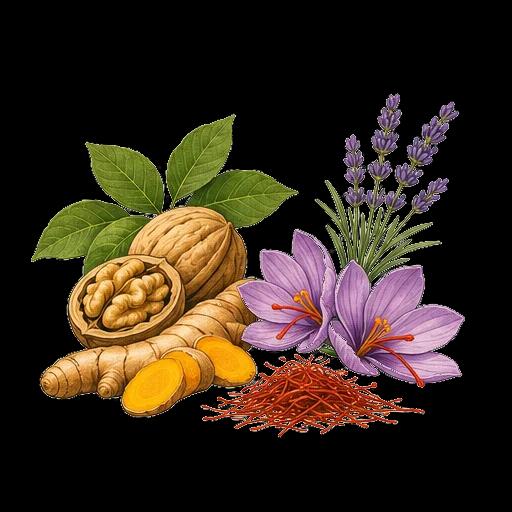
- Common Commercial Tree Nuts (MIDH / NHB)
- Walnut, Almond, and Cashew Nut (note: Coconut is funded separately via MIDH-CDB)
- Saffron, Kala Jeera & Common Rhizomatic/Bulb/Seed Spices (MIDH-NHM / HMNEH)
- Saffron, Kala Jeera, Turmeric, Ginger, Garlic, Onion, Coriander, Cumin, Fennel, Fenugreek, and Chilli
- Essential Oil Distillation & Herbal Processing (MIDH-HMNEH / PMFME)
- Essential Oils, Hydrosols, Dried Medicinal Herbs, Spice Powders, and Herbal Value-Added Extracts
- Aromatic & Essential Oil Crops (MIDH-NHM / HMNEH / CSIR-Aroma Mission)
- Lavender, Damask Rose, Lemongrass, Mint (Mentha), Geranium, Rosemary, Citronella, Palmarosa, Vetiver, Chamomile, Celery, Jasmine, and Tuberose
- Notified Commercial Medicinal Crops (NMPB / MIDH Annexure-V)
- Ashwagandha, Shwet Musali (Safed Musli), Shatavari, Tulsi, Mulethi, Brahmi, Vidarikand, Pippali, Guggle, Manjishtha, Kalihari, Kutki, Atees, Jatamansi, Chirata, and Pushkarmool
Projects in this domain
Open a project to see what it involves, what it may cost, and which schemes to check. Costs and returns are planning estimates. Confirm scheme terms and eligibility with the relevant authority before investing.
Commercial Saffron Cultivation and Infrastructure
Project overview
Scientific rejuvenation and area expansion of GI-tagged Saffron (Crocus sativus) on well-drained karewa/upland soils using graded disease-free corms, sprinkler/drip micro-irrigation, vermicompost, and solar/hot-air stigma dryers with vacuum/glass packaging.
- Estimated cost
- ₹2.50 Lakh to ₹4.50 Lakh/ha (covering graded mother corms @ 50 quintals/ha, land preparation, sprinkler micro-irrigation, INM/IPM, and primary stigma drying/packaging).
- Site size or capacity
- 0.1 ha (2 kanals) to 2.0 ha per farmer under MIDH / HMNEH State Annual Action Plans (primarily in Jammu & Kashmir — Pampore/Pulwama, Budgam, Srinagar, Kishtwar — and select high-altitude Himachal/Uttarakhand pockets).
- Indicative returns
- 35% to 50% annually (corm multiplication yields 2x–3x planting stock within 3 years alongside high-value stigma realization of ₹1.80–₹2.80 Lakh/kg).
- Suitable crops, products or inputs
- Saffron (Crocus sativus — Mongra, Lacha, and Zarda grades).
- Scheme assistance to check
- MIDH / HMNEH (90:10 Centre:State share): 50% of admissible cost norm in Himalayan States/UTs (up to 2.0 ha per beneficiary), plus 50% assistance on solar dryers, grading, and GI-certified packaging infrastructure.
- Market opportunities
- Domestic luxury culinary/hospitality retail, Ayurvedic/pharmaceutical formulators, dairy/confectionery brands, and high-margin international exports (UAE, EU, USA, Saudi Arabia).
- Programme references
- MIDH / HMNEH [National Saffron Mission Convergence]
Kala Jeera and Specialty Seed Spices Cultivation
Project overview
Commercial cultivation of high-altitude Himalayan Kala Jeera (Black Caraway) and arid/semi-arid seed spices using certified high-essential-oil varieties, raised-bed drip/sprinkler irrigation, integrated pest management, and hygienic threshing/grading.
- Estimated cost
- ₹50,000 to ₹1.15 Lakh/ha (MIDH 2025 seed-spice cost norm: ₹50,000/ha in general areas; +15% higher in Himalayan/NE states; higher unit norms for perennial Kala Jeera tubers in J&K/HP).
- Site size or capacity
- 0.2 ha to 2.0 ha (up to 4.0 ha per State AAP) per beneficiary under MIDH / HMNEH / NHM.
- Indicative returns
- 32% to 45% annually (short 4–5 month rabi cycle for Cumin/Coriander/Fennel; perennial high-value harvest for Himalayan Kala Jeera).
- Suitable crops, products or inputs
- Kala Jeera (Bunium persicum), Cumin (Jeera), Coriander, Fennel (Saunf), and Fenugreek (Methi).
- Scheme assistance to check
- MIDH / NHM / HMNEH: 40% of cost norm for general farmers and 50% for small/marginal farmers and NE/Himalayan/Scheduled areas.
- Market opportunities
- Spice trading mandis (Unjha, Ramganjmandi, Jammu/Srinagar), essential-oil/oleoresin extractors, branded retail spice packagers, and global spice exporters.
- Programme references
- MIDH / HMNEH / NHM [Section 7.18 & Annexure-V]
Lavender and Damask Rose Cultivation
Project overview
Commercial temperate aromatic crop plantations (flagship of India's Purple Revolution) utilizing certified tissue-culture/rooted cuttings of Lavender (Lavandula angustifolia) and Damask Rose (Rosa damascena) for high-purity essential oil and rosewater distillation.
- Estimated cost
- ₹1.50 Lakh to ₹1.725 Lakh/ha (MIDH 2025 Aromatic Plants cost norm: ₹1.50 Lakh/ha + 15% Himalayan/NE state enhancement = ₹1.725 Lakh/ha).
- Site size or capacity
- 0.2 ha to 2.0 ha under MIDH / HMNEH; cluster-based planting material and technical handholding via CSIR-IIIM Aroma Mission across J&K, Himachal Pradesh, Uttarakhand, and North-East states.
- Indicative returns
- 35% to 48% annually (perennial productive lifespan of 10–15 years; Lavender oil commands ₹9,000–₹12,000/kg and Damask Rose oil commands ₹6.00–₹9.00 Lakh/kg).
- Suitable crops, products or inputs
- Lavender and Damask Rose (plus Chamomile and Clary Sage in temperate hill zones).
- Scheme assistance to check
- MIDH / HMNEH: 50% of cost norm in Himalayan and North-Eastern States/UTs (40% in general areas). CSIR-Aroma Mission: Subsidized/free quality planting material (QPM), agro-technology transfer, and cluster distillation linkage.
- Market opportunities
- Fine perfumery & luxury cosmetics houses, aromatherapy brands, pharmaceutical/Ayurvedic industries, and international fragrance export buyers.
- Programme references
- MIDH / HMNEH / CSIR-Aroma Mission
Lemongrass and Mentha (Mint) Cultivation
Project overview
Commercial cultivation of fast-growing, multi-cut aromatic grasses and herbs (Lemongrass, Mentha arvensis/piperita, Citronella, Palmarosa, and Vetiver) on irrigated plains and marginal/degraded lands for steam-distilled essential oil production.
- Estimated cost
- ₹60,000 to ₹1.50 Lakh/ha under MIDH 2025 norms; up to ₹2.50–₹3.00 Lakh/ha under NHB Scheme-01 project mode (including drip irrigation).
- Site size or capacity
- 0.2 ha to 2.0 ha (up to 4.0 ha per State AAP) under MIDH / NHM; above 2.0 ha (> 1.0 ha in NE States) under NHB Scheme-01 [Item 1(i)] for Mint, Citronella, Palmarosa & Celery.
- Indicative returns
- 35% to 48% annually (3 to 4 harvests per year for Lemongrass/Citronella/Palmarosa over a 5-year stand; 90–110 day summer crop cycle for Mentha).
- Suitable crops, products or inputs
- Lemongrass, Mint (Mentha), Citronella, Palmarosa, Vetiver, and Celery.
- Scheme assistance to check
- MIDH / NHM: 40% (General) to 50% (Small/Marginal & NE/Hilly/Scheduled areas) of admissible cost norm. NHB Scheme-01 (Circular 21.08.2026): 35% (General) / 45% (NER/Himalayan/Scheduled/UTs). CSIR-Aroma Mission: QPM & cluster distillation support.
- Market opportunities
- Menthol crystal & pharma manufacturers, FMCG soap/detergent/personal-care companies, food-flavouring houses, and global essential-oil exporters.
- Programme references
- MIDH / NHM / CSIR-Aroma Mission [NHB Scheme-01 for > 2 ha]
Geranium and Rosemary Cultivation
Project overview
High-value perennial aromatic shrub and herb cultivation (Rose-scented Geranium and Rosemary) raised via rooted cuttings/plugs with drip irrigation and mulching for both steam-distilled essential oil and dried culinary/antioxidant leaf biomass.
- Estimated cost
- ₹1.50 Lakh to ₹1.725 Lakh/ha under MIDH 2025 Aromatic Plants norm (+15% in hilly/NE areas); up to ₹3.25 Lakh/ha under NHB Scheme-01 project mode.
- Site size or capacity
- 0.2 ha to 2.0 ha under MIDH / HMNEH / NHM; above 2.0 ha (> 1.0 ha in NE States) for Geranium under NHB Scheme-01 [Item 1(i)].
- Indicative returns
- 36% to 50% annually (Geranium yields 3 harvests/year with oil selling at ₹11,000–₹14,000/kg; Rosemary yields both essential oil and dried culinary leaves).
- Suitable crops, products or inputs
- Geranium, Rosemary, Davana, Jasmine, and Tuberose.
- Scheme assistance to check
- MIDH / NHM / HMNEH: 40% (General) to 50% (Small/Marginal & NE/Himalayan/Scheduled areas). NHB Scheme-01 (Circular 21.08.2026): 35% (General) / 45% (NE/Hilly/UTs). CSIR-Aroma Mission: Mother-stock nurseries & technical extension.
- Market opportunities
- Import substitution (India imports >80% of its Geranium oil requirement), natural food-preservative extractors (carnosic/rosmarinic acid), cosmetics, and gourmet culinary brands.
- Programme references
- MIDH / HMNEH / CSIR-Aroma Mission / NHB Scheme-01
Ashwagandha, Safed Musli & Notified Medicinal Crops Cultivation
Project overview
Contract-ready commercial cultivation of the 16 officially notified MIDH/NMPB medicinal plant species using certified seeds/tubers/rhizomes, organic/GAP protocols, drip irrigation, and clean post-harvest root/herb drying.
- Estimated cost
- ₹60,000 to ₹1.50 Lakh/ha (MIDH 2025 Medicinal Plants cost norm up to ₹1.50 Lakh/ha; +15% higher in Himalayan/NE states for high-altitude species like Kutki, Atees, Jatamansi, Chirata & Pushkarmool).
- Site size or capacity
- 0.2 ha to 2.0 ha (up to 4.0 ha per State AAP) per beneficiary under MIDH Annexure-V and National Medicinal Plants Board (NMPB) cluster schemes.
- Indicative returns
- 34% to 48% annually (short 5–6 month crop cycle for Ashwagandha, Tulsi & Shwet Musali; ultra-high value for Himalayan Kutki, Jatamansi & Atees).
- Suitable crops, products or inputs
- Ashwagandha, Shwet Musali (Safed Musli), Shatavari, Tulsi, Mulethi, Brahmi, Vidarikand, Pippali, Guggle, Manjishtha, Kalihari, Kutki, Atees, Jatamansi, Chirata, and Pushkarmool.
- Scheme assistance to check
- MIDH / NHM / HMNEH (Section 10-vi & Annexure-V): 40% (General) to 50% (Small/Marginal & NE/Himalayan/Scheduled areas). NMPB: 30% to 75% species-specific cultivation subsidy (75% for endangered/RET Himalayan medicinal species).
- Market opportunities
- Ayurvedic, Unani & Siddha pharmaceutical companies, herbal nutraceutical extractors, organic wellness brands, and global botanical extract exporters.
- Programme references
- NMPB / MIDH [Section 10(vi) & Annexure-V]
Turmeric, Ginger and Garlic Production (Rhizomatic & Bulb Spices)
Project overview
High-yielding commercial cultivation of curcumin-rich Turmeric (Lakadong, Salem, Erode, Rajapuri), low-fibre Ginger (Nadia, Varada, Mahima), and bold-clove Garlic/Onion using disease-free seed rhizomes/cloves, raised beds, drip irrigation, and plastic mulching.
- Estimated cost
- ₹75,000 to ₹1.50 Lakh/ha under MIDH 2025 rhizomatic/bulb spice norms (+15% higher in NE/Himalayan states; plus ₹32,000/ha support for plastic mulching).
- Site size or capacity
- 0.2 ha to 2.0 ha (up to 4.0 ha per State AAP) per beneficiary under MIDH / NHM / HMNEH.
- Indicative returns
- 32% to 45% annually (7 to 9 month crop cycle for Turmeric/Ginger; 4 to 5 month rabi cycle for Garlic/Onion).
- Suitable crops, products or inputs
- Turmeric, Ginger, Garlic, Onion, and Chilli.
- Scheme assistance to check
- MIDH / NHM / HMNEH (Section 7.18 & 10-vi): 40% of cost norm for general farmers and 50% for small/marginal farmers and NE/Himalayan/Scheduled areas.
- Market opportunities
- Curcumin & ginger-oleoresin extraction industries, spice grinding/packaging units, dehydration plants, domestic wholesale mandis, and export houses.
- Programme references
- MIDH / NHM / HMNEH [Section 7.18, 10(vi) & Annexure-V]
Common Commercial Tree Nuts Plantation (Walnut, Almond & Cashew)
Project overview
Commercial orchard establishment and senile-orchard rejuvenation of grafted/clonal Walnut, Almond (temperate hills), and Cashew Nut (coastal/lateritic belts) integrated with drip irrigation, pollinizer cultivars, and primary hulling/drying.
- Estimated cost
- ₹1.50 Lakh to ₹4.00 Lakh/ha under MIDH 2025 norms (+15% in hilly/NE areas); NHB ceilings of ₹3.50–₹4.50 Lakh/ha (up to ₹100 Lakh under Item 1(i) and ₹200 Lakh under Item 1(ii)).
- Site size or capacity
- 0.2 ha to 2.0 ha under MIDH; above 2.0 ha (> 1.0 ha in NE States) under NHB Item 1(i); above 20.0 ha under NHB Item 1(ii) Large-Scale Import-Substitution mode.
- Indicative returns
- 26% to 36% annually (long productive orchard lifespan of 35–50+ years with non-perishable, high-value kernel output).
- Suitable crops, products or inputs
- Walnut, Almond, and Cashew Nut (note: Coconut is funded separately via MIDH — Coconut Development Board [CDB]).
- Scheme assistance to check
- MIDH / NHM / HMNEH: 40% (General) to 50% (Small/Marginal & NE/Hilly/Scheduled areas). NHB Scheme-01 (Circular 21.08.2026): 35% (General) / 45% (NER, Himalayan States, Scheduled Areas & J&K/Ladakh UTs).
- Market opportunities
- Domestic dry-fruit wholesale markets, cashew/walnut shelling & grading processors, bakery/confectionery brands, and international nut exporters.
- Programme references
- MIDH / NHB Scheme-01 [Item 1(i) & 1(ii)]
Essential Oil Distillation & Medicinal/Aromatic Plant Processing Unit
Project overview
Cluster-level or commercial post-harvest processing unit comprising stainless-steel steam/hydro distillation stills, Florentine oil-water separators, solar/heat-pump crop dryers, herbal pulverizers, spice boilers/polishers, and amber-glass/pouch packaging.
- Estimated cost
- ₹8.00 Lakh to ₹50.00 Lakh (Field steam distillation unit: ₹8–₹18 Lakh; Integrated herbal drying, extraction & packaging enterprise under PMFME/NHB: ₹20–₹50 Lakh).
- Site size or capacity
- 500 sq. ft. to 3,500 sq. ft. processing shed (mobile/field distillation units of 250–1,000 kg/batch capacity or commercial multi-still plants).
- Indicative returns
- 32% to 45% annually (on-farm steam distillation cuts biomass transport cost by 95% and converts bulky fresh herbs into high-value essential oil).
- Suitable crops, products or inputs
- Essential Oils & Hydrosols (Lavender, Damask Rose, Lemongrass, Mentha, Geranium, Rosemary, Citronella, Palmarosa, Vetiver), Dried Medicinal Herbs, Spice Powders, and Herbal Value-Added Extracts.
- Scheme assistance to check
- MIDH / NHM / HMNEH (Section 7.58 & 10-ix): 40%–50% assistance for minimal processing & Solar Crop Dryers. NHB Scheme-01 [Item 1(vii)] (Circular 21.08.2026): 35% (General) / 45% (NE/Hilly/UTs) for Primary Processing of Aromatic Plants. PMFME (MoFPI): 35% credit-linked subsidy up to ₹10.00 Lakh (individuals) / ₹3.00 Crore (FPOs/SHGs) for food-grade spices & herbal extracts.
- Market opportunities
- Fragrance & flavour (F&F) corporates, Ayurvedic/pharma extract manufacturers, aromatherapy D2C brands, and global essential-oil export houses.
- Programme references
- MIDH / HMNEH / NHB Scheme-01 [Item 1(vii)] / PMFME (MoFPI)
Eligibility and scheme notes
- MIDH / HMNEH (2025 Guidelines) & NMPB Rules: Medicinal plant subsidies under MIDH are strictly restricted to the 16 notified Annexure-V cultivated species (wild harvesting is ineligible), and Himalayan/NE States/UTs receive +15% higher unit cost norms.
- NHB Circular (21.08.2026): Credit-linked back-ended subsidy for commercial plantations (> 2 ha; > 1 ha in NE States) and primary aromatic processing is 35% in General Areas and 45% in NER, Himalayan States, Scheduled Areas, and specified UTs (J&K, Ladakh, A&N, Lakshadweep). Cost of land is excluded.
- PMFME Eligibility: PMFME (35% subsidy up to ₹10 Lakh for individuals / ₹3.00 Cr for FPOs) applies to food-grade spice and herbal value-addition enterprises, whereas non-food essential-oil distillation units are covered under MIDH, NHB Primary Processing, or KVIC-PMEGP. Expected ROI figures are indicative commercial benchmarks.
Ready to apply?
Tell us about your project in the member portal. If you need to sign in, we’ll take you straight to this application afterwards.